
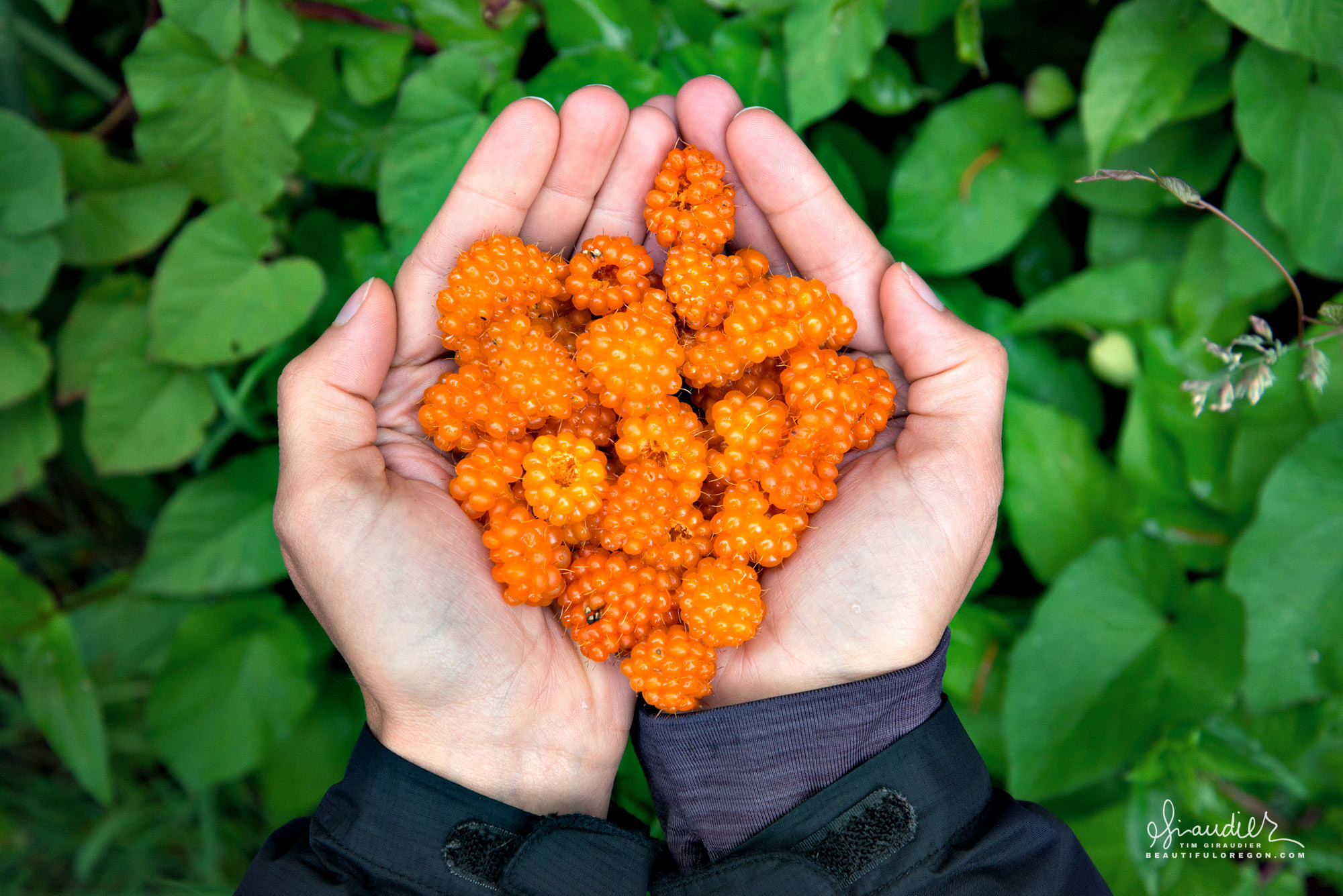
Salmon Berries – Rubus spectabilis – Wild Edibles of the PNW
$ 49.50
& Livraison gratuite plus de 60€A handful of Salmon Berries (Rubus spectabilis) freshly picked from the foggy understory of the Elliott State Forest, in the Coast Range of western Oregon. Throughout western Oregon and across the Pacific Northwest, the salmonberry, is typically found in moist shady areas near streams and along riparian corridors. The Salmonberry is a deciduous shrub, sets large magenta flowers in early spring, while the distinctive orange-red berries ripen between May and July. Beyond the fruit, the young shoots are also edible and were traditionally steamed or boiled, offering a taste similar to asparagus. For Native American tribes in the Pacific Northwest, the berries were a significant food source, enjoyed fresh and often paired with salmon or salmon eggs. This connection to salmon may even be the origin of the berry’s name. The harvest was a communal affair, with families holding feasts featuring the initial, most abundant berries before opening the patch to the wider community. The salmonberry plant also offered medicinal benefits. Astringent teas made from the leaves and bark were used to treat ailments like diarrhea. A poultice of the leaves and bark could also be applied to burns and open sores. Various tribes had specific medicinal uses, such as the Makah using pounded bark for toothaches or the Quileute using bark tea during labor. In addition to sustenance and medicine, the plant’s branches were even used by some tribes, like the Makah, to make pipe stems. Salmonberries also provide food for a variety of wildlife, including birds, squirrels, and bears. The dense thickets formed by the shrubs also offer shelter for small animals and nesting sites for birds. Their ability to quickly sprout after disturbances like wildfires further highlights their importance in ecological recovery. Culturally, salmonberries are more than just a resource; they symbolize interconnectedness and community. The timing of the berry season coincides with the return of certain hummingbirds and the Swainson’s thrush, highlighting the cyclical nature of the ecosystem. Some Salish Elders even teach that salmonberry abundance can indicate the health of salmon runs, further emphasizing the interconnectedness of people, plants, and animals. Today, salmonberries continue to be enjoyed in various ways, from jams and jellies to innovative modern recipes, maintaining their role as a cherished symbol of the Pacific Northwest and its rich cultural heritage. Douglas County, Elliott State Forest, Salmon Berries, Wild Harvest
Produits similaires
-
CAMERA PTZ CANON CR-N700 NOIRE $ 99.61
-
Camera Canon ME20F-SHN $ 90.46