
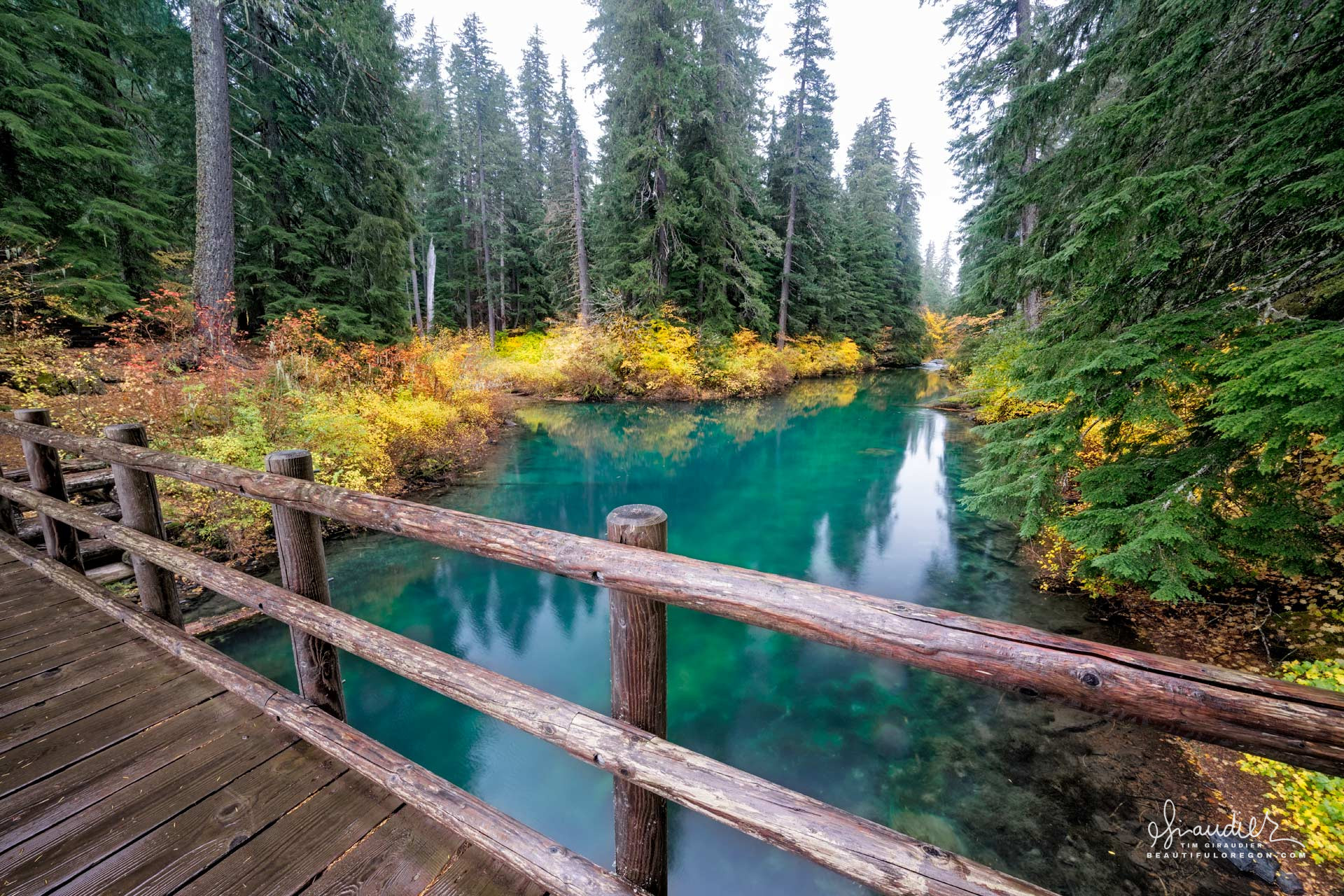
McKenzie River Clear Lake
$ 49.50
& Livraison gratuite plus de 60€Hydrologic Dynamics of Clear Lake and the Headwaters of the McKenzie River Clear Lake, located in Oregon’s central Cascades at an elevation of approximately 3,012 feet, is the principal source of the McKenzie River, one of the Willamette Basin’s most important tributaries. The hydrologic dynamic between the lake and the river’s headwaters is governed by volcanic geology, groundwater inputs, and spring-fed inflows. The lake was formed roughly 3,000 years ago when a basaltic lava flow from nearby Sand Mountain dammed a preexisting stream valley. The lava’s flow path created an impermeable barrier, forcing groundwater to accumulate behind it and forming the modern Clear Lake. This geologically recent origin is evidenced by submerged, still-upright trees preserved in cold water along the lake’s bottom—remnants of the ancient forest inundated by the lava-dammed waters. Clear Lake is primarily spring-fed. The lake receives most of its water from large, cold springs that emerge from the porous lava fields surrounding the lake, especially on the northern and eastern shores. These springs originate as snowmelt from higher elevations, which percolates through miles of young, highly permeable volcanic rock—primarily basaltic lava—before emerging at the lake. As a result, the inflow is steady, cold, and exceptionally clear, with minimal sediment or turbidity, even during peak runoff periods. The McKenzie River begins at the lake’s outlet on the southwest shore, flowing steadily from a natural control point regulated by the lake’s narrow outflow channel. Because the lake acts as a natural reservoir and its inputs are dominated by groundwater, the McKenzie River exhibits stable baseflows, cool summer temperatures, and relatively low seasonal variability—key characteristics that support a high-quality aquatic ecosystem downstream, including native cold-water fish populations such as bull trout and spring Chinook salmon. This hydrologic system is a classic example of a spring-fed river originating from young volcanic terrain, where lava flows act both as conduits and filters for regional groundwater. The result is a stable, clear, and cold river source that plays a vital role in the hydrology, ecology, and water supply of western Oregon. Autumn, Clear Lake, Linn County, McKenzie River, Oregon Cascades, Trail
Produits similaires
-
CAMERA PTZ CANON CR-N700 NOIRE $ 99.61
-
Camera Canon ME20F-SHN $ 90.46