
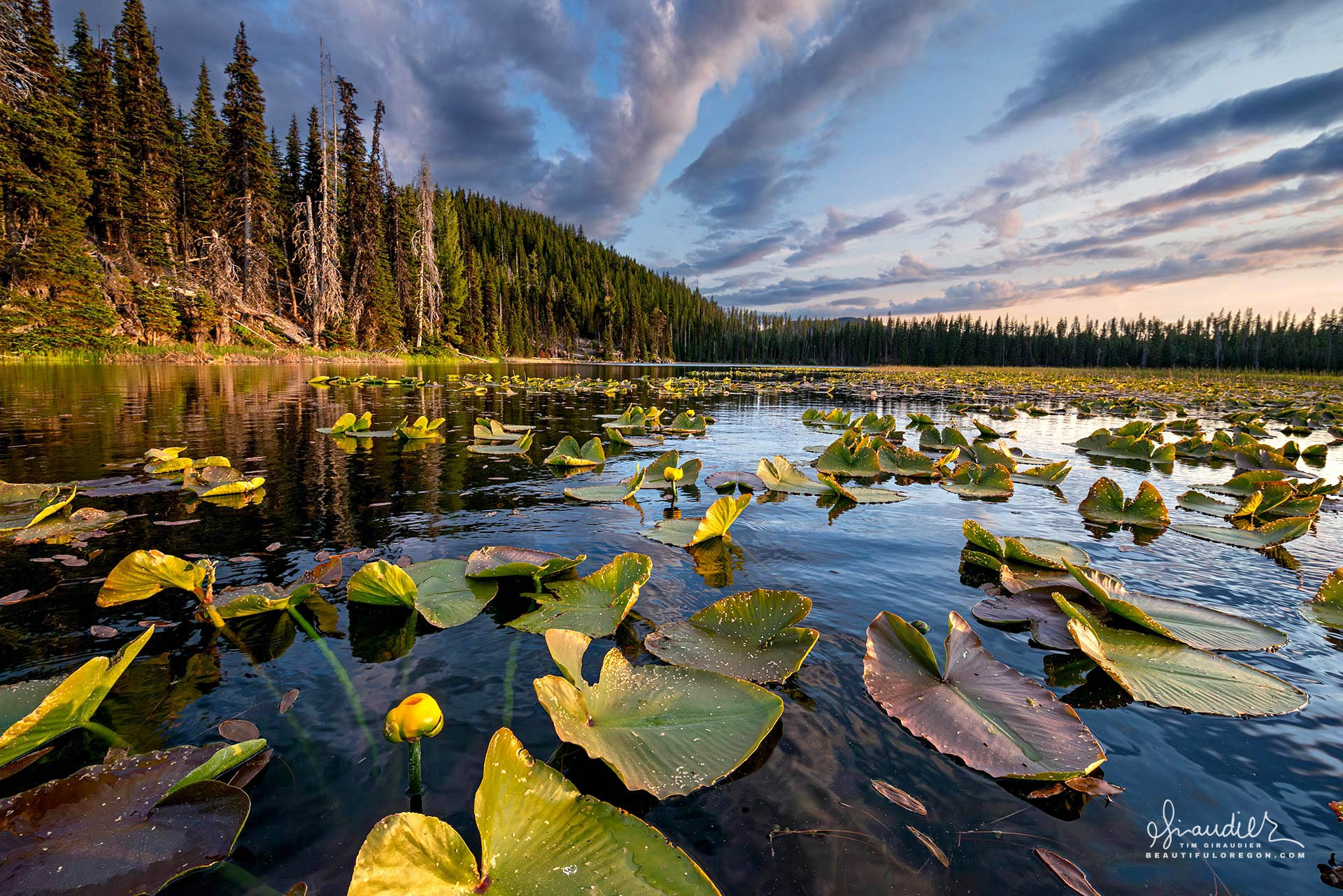
Hosmer Lake Pond Lilies – Oregon Cascades
$ 49.50
& Livraison gratuite plus de 60€Yellow Pond Lily (Nuphar polysepalum) covers large areas of Hosmer Lake in Oregon’s Central Cascades. Hosmer Lake, located in the central Oregon Cascades within the Deschutes National Forest, is a high-altitude lake renowned for its clear waters, diverse aquatic vegetation, excellent fly fishing, and dramatic volcanic backdrop. Situated at an elevation of 4,966 feet, this shallow lake spans 160 acres and is divided into two connected basins, linked by a narrow channel choked with aquatic vegetation. Among its defining features is the presence of several aquatic plants such as the yellow pond lily (Nuphar polysepala), hardstem bulrush (Schoenoplectus acutus), and Floating-leaved Pondweed (Potamogeton natans). The prolific abundance of these aquatic plants adds both ecological richness and a memorable visual appeal to the lake. Understanding the ecological dynamics of Hosmer Lake requires delving into its geologic history and the role aquatic vegetation plays in shaping the lake’s ecosystem. Hosmer Lake owes its origin to the volcanic processes that have shaped the Cascade Range over millennia. It sits within a glacially carved basin formed during the last ice age, when advancing glaciers sculpted valleys and deposited moraines. These glacial features created the lake’s shallow, irregular basins. Surrounding volcanic activity, including eruptions from Mount Bachelor and other nearby volcanic vents, contributed layers of volcanic ash, pumice, and lava flows that now influence the hydrology and nutrient content of the region. The lake’s hydrology is spring-fed, with snowmelt from the surrounding peaks, including South Sister and Broken Top, replenishing its waters. The shallow nature of Hosmer Lake allows sunlight to penetrate most of its surface, creating ideal conditions for aquatic vegetation to thrive. The yellow pond lily (Nuphar polysepala) is a prominent aquatic plant in Hosmer Lake. Its large, floating leaves and bright yellow, cup-shaped flowers are iconic features of the lake’s surface, providing essential ecological functions. The plant thrives in shallow, slow-moving or still waters, such as the backwaters and edges of Hosmer’s basins. Hosmer Lake has become a popular destination for recreationists, particularly for fly fishing and kayaking. The lake’s clear waters and unique no-motorboat restriction preserve its tranquil atmosphere and protect its delicate ecosystem. However, excessive human activity has introduced challenges, such as invasive species like Eurasian watermilfoil (Myriophyllum spicatum), which threaten the balance of native aquatic vegetation. Conservation efforts are underway to manage invasive species and maintain the lake’s ecological integrity. Cascade Lakes Highway, Central Oregon Cascades, Deschutes County, Deschutes National Forest, Hosmer Lake, Pond Lily, Wildflowers
Produits similaires
-
Camera Canon ME20F-SHN $ 90.46
-
CAMERA PTZ CANON CR-N700 NOIRE $ 99.61