
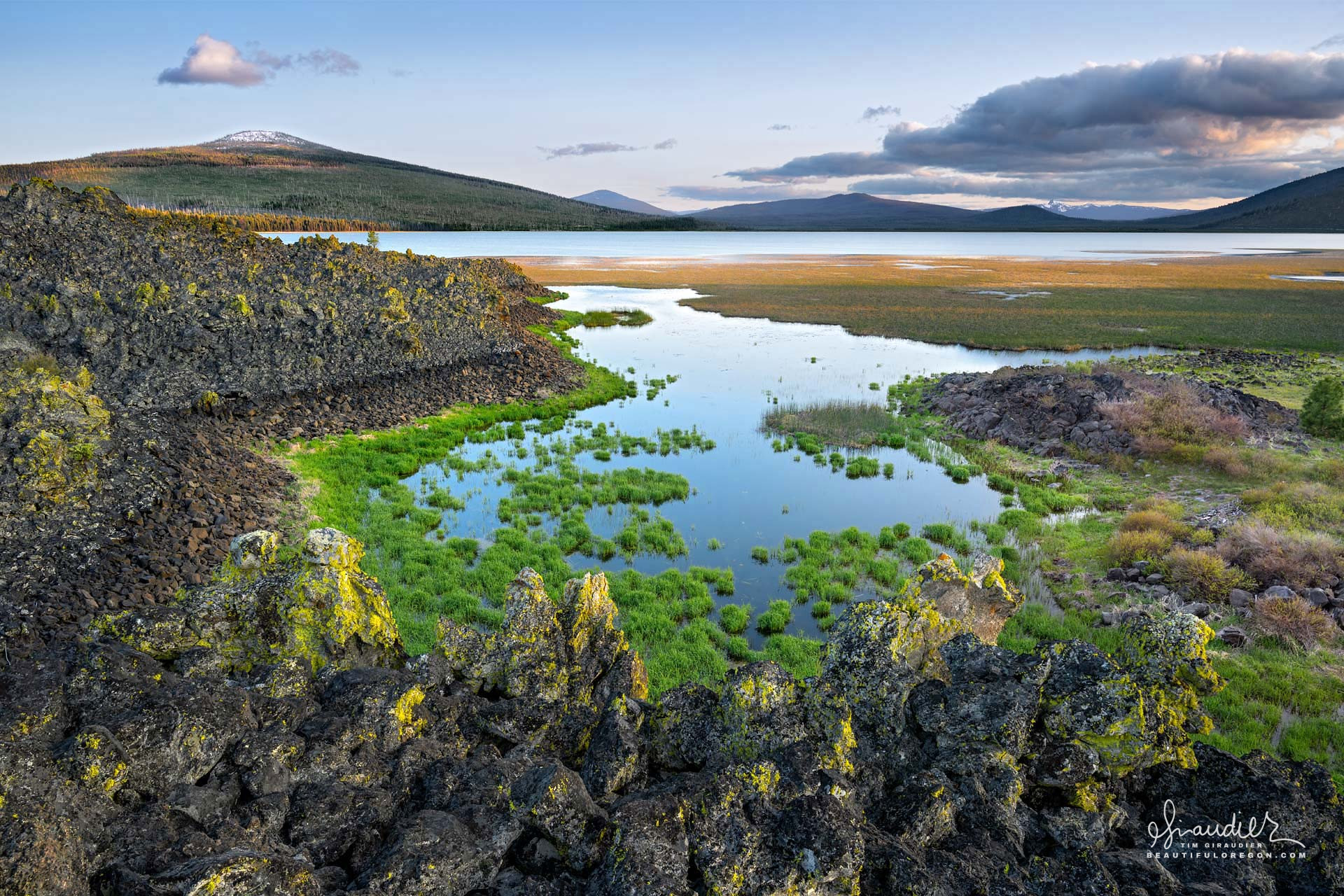
Davis Lake Central Oregon Cascades
$ 49.50
& Livraison gratuite plus de 60€The dynamic volcanic and marsh habitat of Davis Lake in Oregon’s central Cascade Mountains. Davis Lake, located in the Central Oregon Cascades, is a striking example of the region’s dynamic volcanic history. This high-elevation lake, situated near notable volcanic features and surrounded by dense forests, owes its origins to lava flows and glacial activity. Davis Lake lies along the western edge of the Deschutes National Forest, at an elevation of approximately 4,400 feet. The lake’s formation is closely tied to volcanic activity in the Central Cascades, particularly to the lava flows emanating from nearby volcanic features. Davis Lake is partially dammed by a Holocene lava flow, which originated from the Davis Lake Volcanic Field, specifically the Davis Mountain shield volcano located just southeast of the lake. Approximately 6,000 to 7,000 years ago, a basaltic andesite lava flow erupted from Davis Mountain. This flow traveled northwest, impeding the natural drainage of the area and forming a natural dam. Behind this dam, water accumulated to create Davis Lake. The flow itself is composed of blocky, dark basaltic andesite rock with visible cooling fractures and vesicular textures typical of highly fluid lavas. The lake is fed by Odell Creek, snowmelt, precipitation, and groundwater seepage. The porous nature of the surrounding volcanic rock allows for significant interaction between surface water and subsurface aquifers, contributing to the lake’s water levels and ecological characteristics. Nearby volcanic features: Diamond Peak, a prominent Cascade stratovolcano located about 10 miles to the south, is part of the older High Cascades volcanic arc. Diamond Peak was a significant contributor to the regional landscape, with eruptions occurring from the late Pliocene to the early Pleistocene. Its glacially sculpted summit and radial lava flows helped shape the terrain surrounding Davis Lake. The broader Central Cascades region is characterized by a diverse range of volcanic features, including shield volcanoes, stratovolcanoes, cinder cones, and lava fields. These features reflect the tectonic activity associated with the subduction of the Juan de Fuca Plate beneath the North American Plate, which drives volcanic processes along the Cascade volcanic arc. Ethnographic History: The first peoples to utilize the area around Davis Lake were primarily from the Klamath and Molalla tribes, with occasional use by the Northern Paiute and other nearby groups. The Klamath tribes, whose ancestral lands extended across south-central Oregon, played a prominent role in the ethnographic history of the Davis Lake area. The lake and its surrounding forests provided abundant resources, including fish, waterfowl, elk and deer. The Klamath were particularly skilled fishers, using spears and nets to harvest species such as whitefish in the lake and tributary streams clear waters. Seasonal hunting camps were established in the nearby forests, taking advantage of the area’s rich game. Native peoples collected edible and medicinal plants, including berries, roots, and seeds, from the meadows and forests surrounding Davis Lake. Obsidian, sourced from nearby volcanic deposits in the region, was a critical resource for tool-making. Davis Lake’s proximity to obsidian-rich areas, such as Newberry Caldera, makes it likely that early peoples utilized the lake as a waypoint in trade and tool production networks. Paleoindian Activity (~13,000 to 7,500 years ago): Evidence of human activity in the wider Central Oregon region dates back to the late Pleistocene. Sites such as Fort Rock Cave, located southeast of Davis Lake, have revealed artifacts like sagebrush sandals dated to over 9,000 years ago. While no directly comparable finds have been uncovered at Davis Lake, the region’s proximity to known Paleoindian sites suggests that early humans likely traveled through or utilized the area for hunting and foraging. Archaic Period (~7,500 to 2,000 years ago): During this period, populations in the Central Cascades increasingly adapted to changing environments, including the development of diverse subsistence practices. The forests, meadows, and waterways near Davis Lake would have been rich in game, fish, and plant resources, attracting seasonal habitation. Projectile points, grinding stones, and other artifacts recovered from nearby sites indicate a long-standing human presence. Cascade Lakes Highway, Davis Lake, Deschutes County, Deschutes National Forest, Klamath County, Lava
Produits similaires
-
CAMERA PTZ CANON CR-N700 NOIRE $ 99.61