
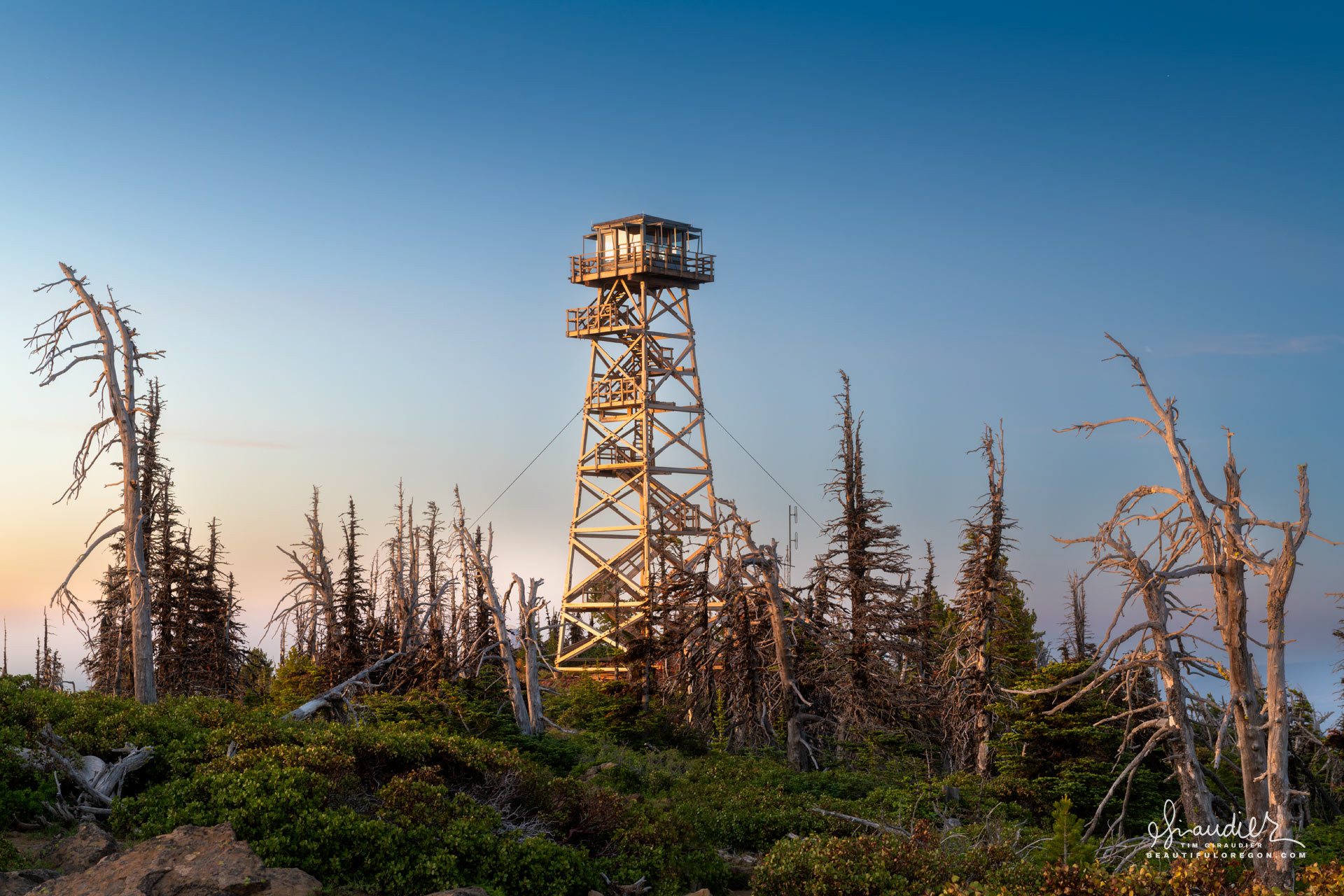
Black Butte Fire Lookout
$ 49.50
& Livraison gratuite plus de 60€Perched atop the summit of Black Butte, a prominent volcanic cone in central Oregon’s Deschutes National Forest, the Black Butte fire lookout has played a significant role in the history of fire detection and forest management in the Pacific Northwest. At an elevation of 6,436 feet, the summit provides commanding views of the surrounding landscape, including the Cascade Range to the west and the high desert to the east, making it an ideal vantage point for early fire detection efforts. The history of the lookout reflects broader trends in American forestry, civil infrastructure development, and evolving attitudes toward wildfire management. The earliest fire detection efforts at Black Butte date to the early 20th century, a period when the U.S. Forest Service was rapidly expanding its infrastructure in response to major wildfires across the West, most notably the 1910 “Big Blowup” in northeastern Washington and Montana. Black Butte, due to its steep, symmetrical profile and isolation from other peaks, was quickly recognized as a strategic site for spotting lightning ignitions in the mixed-conifer forests that spread across the Metolius Basin and surrounding areas. The first documented fire lookout activity on Black Butte occurred in the 1910s, when a tent camp and alidade (a simple surveying instrument) were used for summer observations. By the 1920s, a more permanent presence was established. In 1923, the Forest Service constructed a crows-nest lookout—a small platform built high in a surviving snag or tree near the summit—combined with a small ground cabin for seasonal occupancy. These early structures were part of a broader national push to establish a network of fixed fire detection points across federal lands. Observers stationed at Black Butte communicated with district rangers and firefighting crews via telegraph or, later, crank telephones strung along rudimentary wire lines down the mountain. The most significant development came in 1934, during the Great Depression, when the Civilian Conservation Corps (CCC)—a New Deal-era workforce composed of unemployed young men—constructed a standard-design L-4 lookout cab atop a 20-foot timber tower on the summit. The L-4 model, designed by the Forest Service in the 1930s, consisted of a 14-by-14-foot wooden cabin with windows on all sides and a central Osborne fire-finder. It provided both workspace and basic living quarters for seasonal lookouts who typically manned the station from late spring through early fall. The CCC’s efforts also included the construction of a trail to the summit and the installation of a phone line down to the base of the butte. This allowed for faster fire reporting and coordination, reducing the time between detection and dispatch. Throughout the mid-20th century, the Black Butte lookout was an integral part of the regional fire suppression system, its observers responsible for scanning vast expanses of dry forest during thunderstorm activity and peak fire months. As aerial surveillance, remote sensing, and satellite technology emerged in the latter half of the 20th century, the role of fixed lookouts began to decline. However, Black Butte’s strategic location ensured its continued seasonal use well into the late 20th and early 21st centuries. While many lookouts were decommissioned, dismantled, or lost to neglect and vandalism, Black Butte’s structure was maintained due to its high visibility, public interest, and historical value. The lookout also remained in limited operational use during high fire danger periods, and volunteers or Forest Service staff were occasionally stationed there during lightning events. Today, the Black Butte fire lookout is recognized not only for its ongoing utility but also for its cultural and historical significance. It is listed on the National Historic Lookout Register and serves as an interpretive site for visitors who hike the 3.8-mile trail to the summit. The trail passes through old-growth ponderosa pine and mixed fir forests, gradually revealing sweeping views as one nears the top. The original 1934 cab, though no longer continuously staffed, remains intact, a visible testament to the era of human observation and early forest conservation. The lookout continues to symbolize the evolving relationship between humans and wildfire in the Pacific Northwest—shifting from total suppression toward a more nuanced understanding of fire’s ecological role, even as vigilance from high places like Black Butte remains part of the landscape’s story. Pictured in this photography, the currently operational fire lookout tower in use at Black Butte, was built in 1995, and is 65 feet tall, with a 10×10 foot cab. Deschutes National Forest, Central Oregon Cascades. Black Butte, Deschutes County, Deschutes National Forest, Fire Lookout, Historic Oregon
Produits similaires
-
Camera Canon ME20F-SHN $ 90.46