
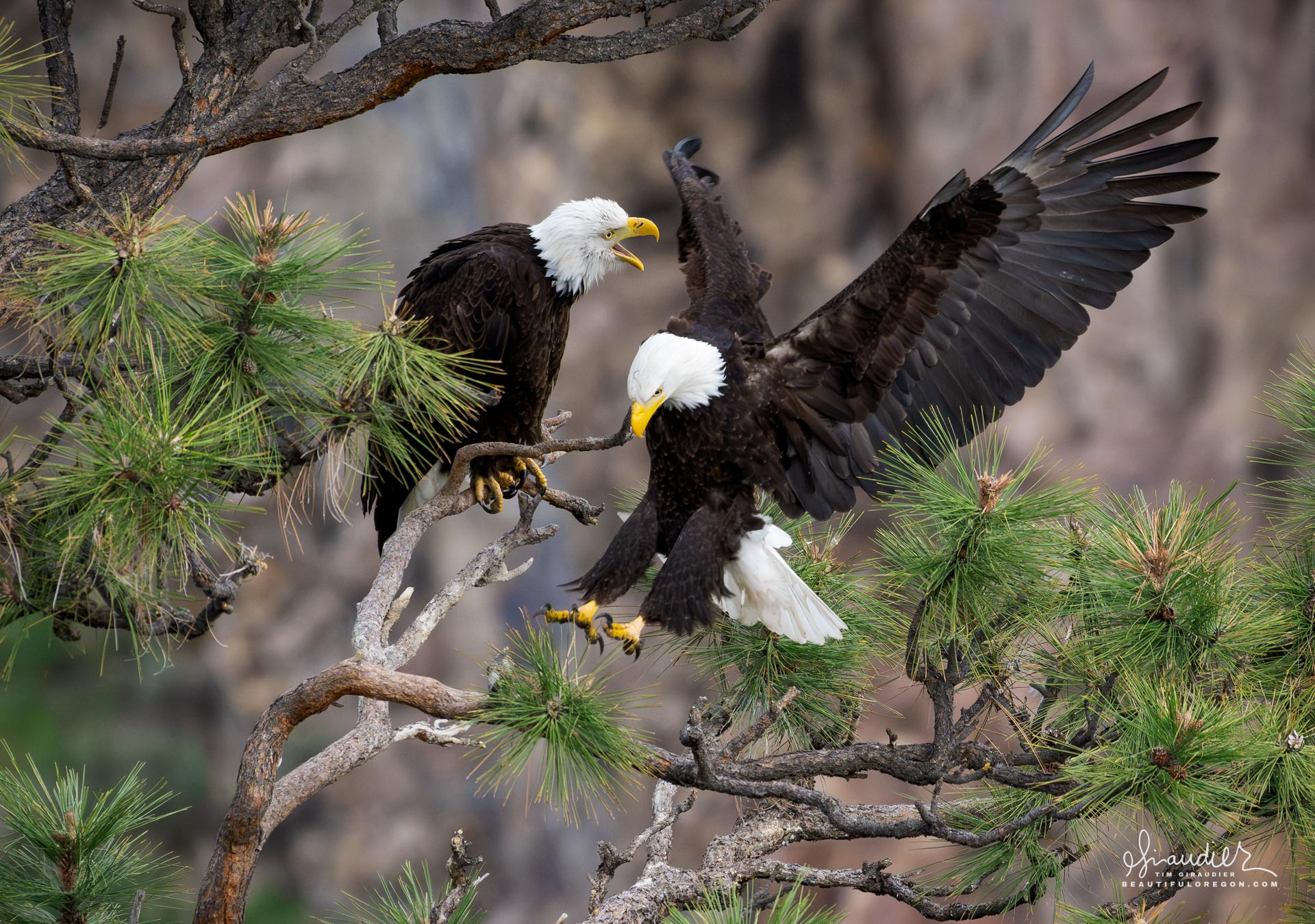
Bald Eagles of Central Oregon
$ 49.50
& Livraison gratuite plus de 60€In a solitary Ponderosa Pine in Central Oregon, a mated pair of Bald Eagles (Haliaeetus leucocephalus) perch together in an elaborate display of courtship. The Bald Eagle is a ubiquitous bird of prey throughout North America, and exhibit fascinating mating behaviors, which include: monogamy, elaborate courtship rituals, and cooperative nesting strategies, all of which contribute to the species’ reproductive success and population stability. Bald Eagles are predominantly monogamous, and often form lifelong pair bonds. Over time, this helps refine cooperative breeding strategies, enhances reproductive efficiency, and increases chick survival. Monogamous pairing is reinforced through mutual participation in nest building and maintenance, shared incubation duties, and joint hunting and feeding of offspring. Courtship among Bald Eagles is both dramatic and intricate, serving as a means to strengthen pair bonds and synchronize reproductive readiness. One of the most notable courtship behaviors is the aerial display known as the “cartwheel display,” where two eagles lock talons in mid-air and spin downwards in a free-fall, releasing each other just before reaching the ground. This display not only reinforces the pair bond but also demonstrates the physical fitness and coordination of the participants. Additionally, eagles engage in mutual preening, nest building, and vocalizations, which further solidify the pair bond and readiness for mating. Historical Decline, and Population Rebound of North American Bald Eagle Population The recovery of the Bald Eagle population in the United States is one of the most notable North American conservation success stories. Bald Eagles, once on the brink of extinction, have made a significant comeback due to a combination of legal protection, habitat preservation, and targeted conservation efforts. The decline of bald eagle populations began in the late 19th and early 20th centuries, primarily due to habitat destruction, hunting, and the widespread use of the pesticide DDT. By the 1960s, the number of bald eagles in the contiguous United States had plummeted to fewer than 450 nesting pairs. DDT, in particular, had a devastating impact as it caused thinning of eggshells, leading to reproductive failures. The recovery efforts began in earnest with the banning of DDT in 1972, following the publication of Rachel Carson’s influential book, “Silent Spring,” which highlighted the environmental impact of pesticides. In 1973, the Endangered Species Act provided further protection, listing the bald eagle as endangered throughout most of the U.S. These measures were critical in curbing the threats to eagle populations. Additionally, conservationists focused on habitat protection and restoration, as well as breeding programs. Public awareness campaigns and stricter enforcement of hunting laws also played essential roles in the recovery process. The results of these efforts have been remarkable. By 1995, the bald eagle was reclassified from endangered to threatened, and in 2007, it was removed from the Endangered Species List altogether. The population has continued to grow, with current estimates indicating over 71,400 nesting pairs across the United States. This resurgence is particularly evident in regions like the Great Lakes, the Pacific Northwest, and the Chesapeake Bay area, where eagle populations have flourished due to the abundance of suitable habitats and food sources. While the bald eagle population has rebounded impressively, ongoing conservation efforts remain crucial to sustain this success. Habitat protection continues to be a priority, as development and environmental changes pose new challenges. Monitoring programs help track the health of eagle populations and detect potential threats early. The comeback of the bald eagle population is a testament to the effectiveness of concerted conservation efforts and environmental policy. From the brink of extinction, the bald eagle has soared back to a thriving population, symbolizing hope and resilience in wildlife conservation. Bird watching, and photography of Bald Eagles in Eastern Oregon, and the Canyon Lands of Deschutes County. Bald Eagle, Deschutes County, Ponderosa
Produits similaires
-
Camera Canon ME20F-SHN $ 90.46